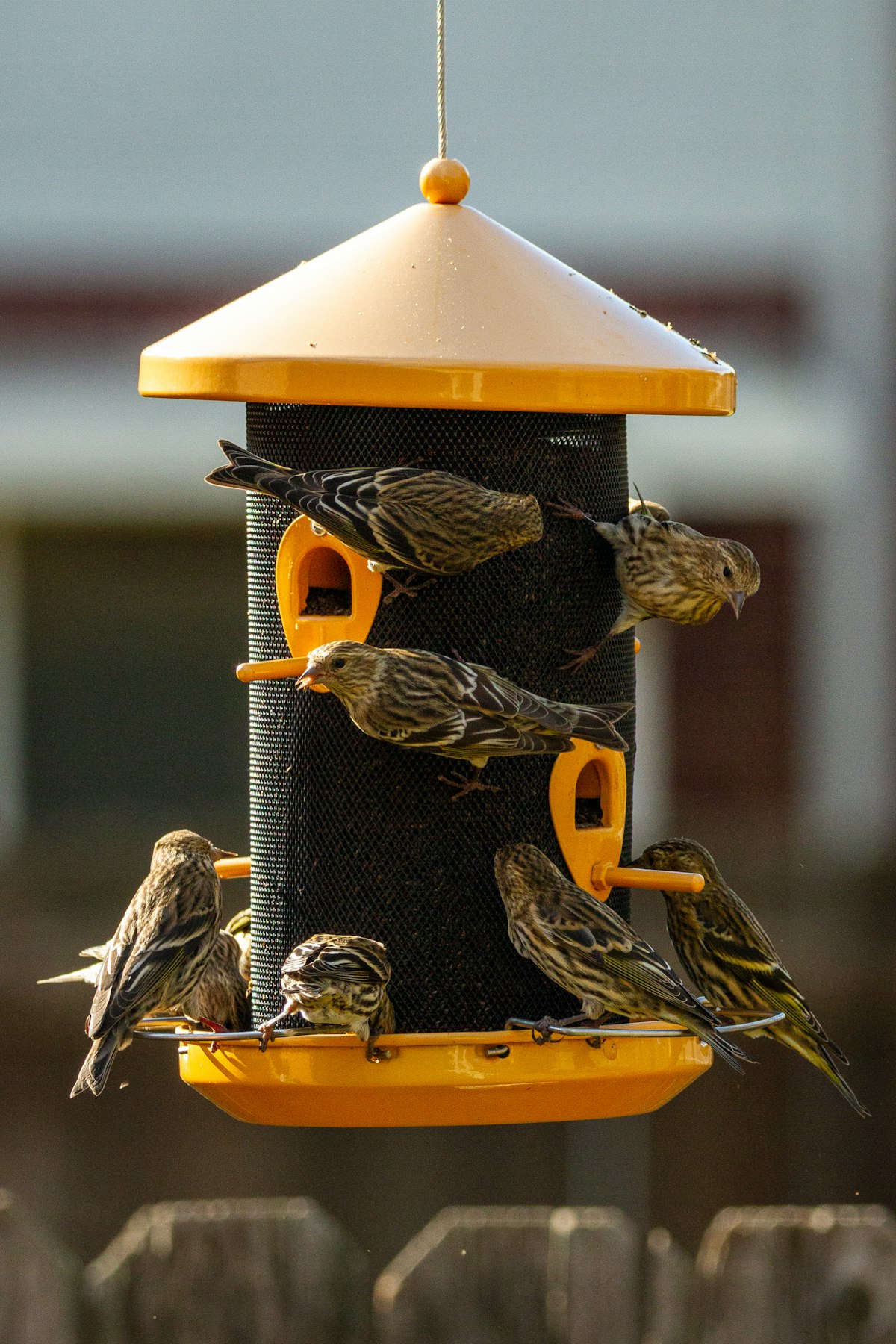
Goldfinches and house finches are some of the brightest, most cheerful visitors you can attract to a backyard, but they're picky about how they eat. Their tiny bills are made for small Nyjer (thistle) seeds, and they love to cling. The best bird feeder for finches holds Nyjer, lets several birds cling at once and keeps seed dry. Our top pick is the Kingsyard Metal Mesh Finch Feeder; if squirrels are a problem, get the Squirrel Buster Nyjer Feeder.
We compared popular Nyjer and thistle feeders based on specs, materials and thousands of customer reviews, looking at what actually matters to finches and the people who feed them: feeding style (mesh or ports), capacity, squirrel resistance, seed waste and how easy each feeder is to clean. We didn't personally test these feeders; this guide is based on manufacturer details and patterns in owner feedback.
Quick Comparison
| Feeder | Best For | Style | Capacity | Standout Feature |
|---|---|---|---|---|
| Kingsyard Metal Mesh | Best overall | Mesh tube | Up to 2.5 lbs | All metal |
| Squirrel Buster Nyjer | Squirrel problems | 8 ports | Medium | Weight-activated shroud |
| Perky-Pet Wire Mesh | Budget | Mesh tube | About 1.5 lbs | Evenseed flow |
| iBorn 15-Inch | Less waste | 12 ports | Medium | Drainage holes |
| Audubon Die-Cast | Easy cleaning | Port tube | About 1 lb | Quick-release base |
| Kingsyard with Tray | Less mess | Tube + tray | Medium | 9.5" seed tray |
How We Picked These Finch Feeders
- Made for Nyjer: Nyjer seeds are tiny and slip through regular feeder ports, so we only included feeders designed for Nyjer/thistle (some also take finch mix).
- Clinging space: finches feed in flocks; more clinging or perching spots means less squabbling and more birds for you to watch.
- Seed freshness: drainage, roofs and even seed flow matter because finches abandon wet, moldy seed.
- Durability: metal mesh and die-cast parts beat thin plastic that cracks in cold weather or gets chewed.
- Squirrels and waste: we covered both a truly squirrel-proof option and lower-waste port designs.
- Cleaning: feeders that come apart easily get cleaned more often, which keeps birds healthier.
1. Kingsyard Metal Mesh Finch Feeder — Best for Most Backyards
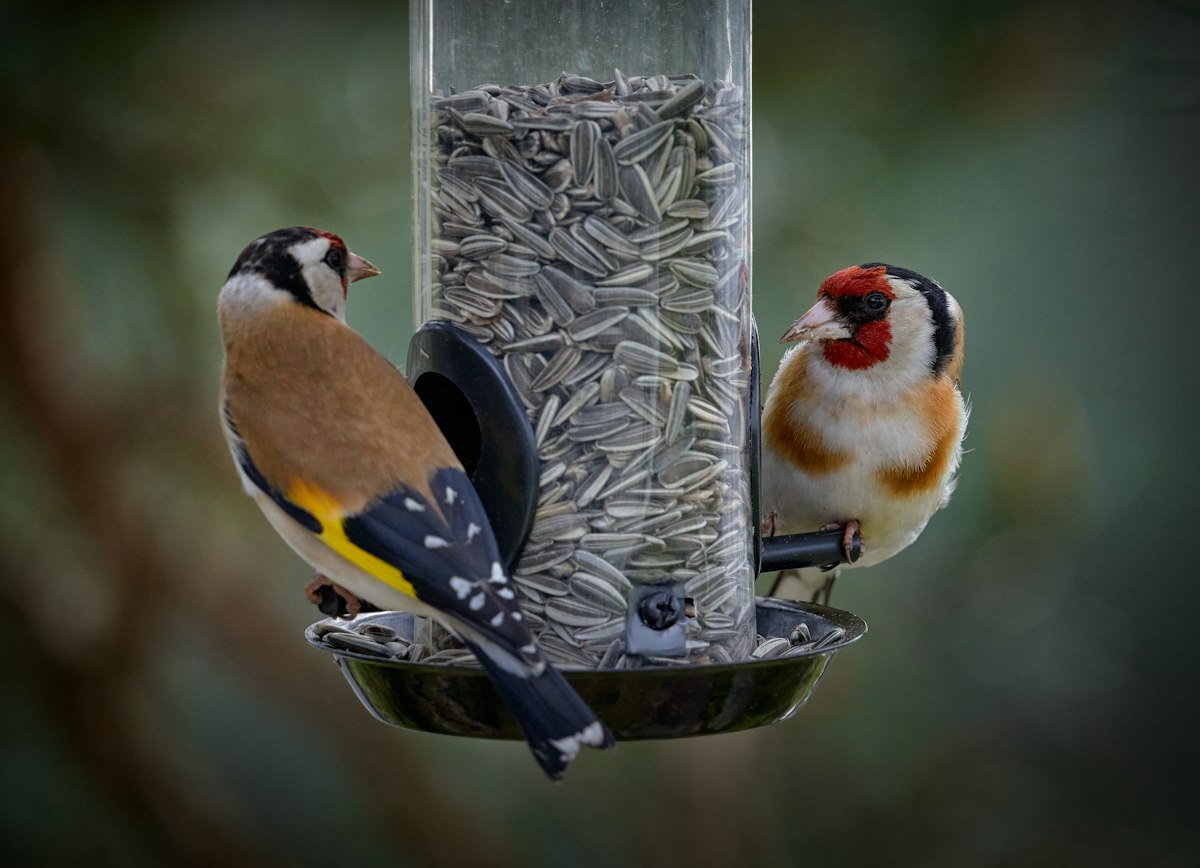
The Kingsyard Metal Mesh Finch Feeder hits the sweet spot for most people who want goldfinches in the yard: it's all metal, holds a lot of seed and lets many birds feed at once. With a 4.5-star average from more than 2,400 ratings, it's one of the best-reviewed finch feeders on Amazon.
A mesh tube works the way finches naturally feed. Goldfinches, pine siskins and house finches are clingers, so they hang on the mesh anywhere around the tube and pull out tiny Nyjer seeds through the openings. That means a dozen birds can feed at once instead of fighting over a few ports.
Kingsyard makes it with no wood and no plastic, using a powder-coated metal mesh that resists rust and stands up to squirrels chewing. It holds up to 2.5 lbs of seed, so you aren't refilling every other day during busy fall and winter flocks.
Key specs
- All-metal construction, powder-coated wire mesh
- Holds up to 2.5 lbs of Nyjer/thistle seed
- 360° mesh clinging surface for many finches at once
- Hanging design
Who it's for: Anyone who wants lots of goldfinches with less refilling, especially in yards with moderate squirrel activity.
Skip it if: Squirrels in your yard are relentless acrobats; a weight-activated feeder like the Squirrel Buster works better.
- Large capacity
- All-metal and chew resistant
- Lets many finches feed together
- Huge review base
- Mesh can clog if seed gets wet
- Determined squirrels can still steal some seed
- Needs a brush to clean the mesh thoroughly
2. Squirrel Buster Nyjer Feeder — Best for Squirrel Problems
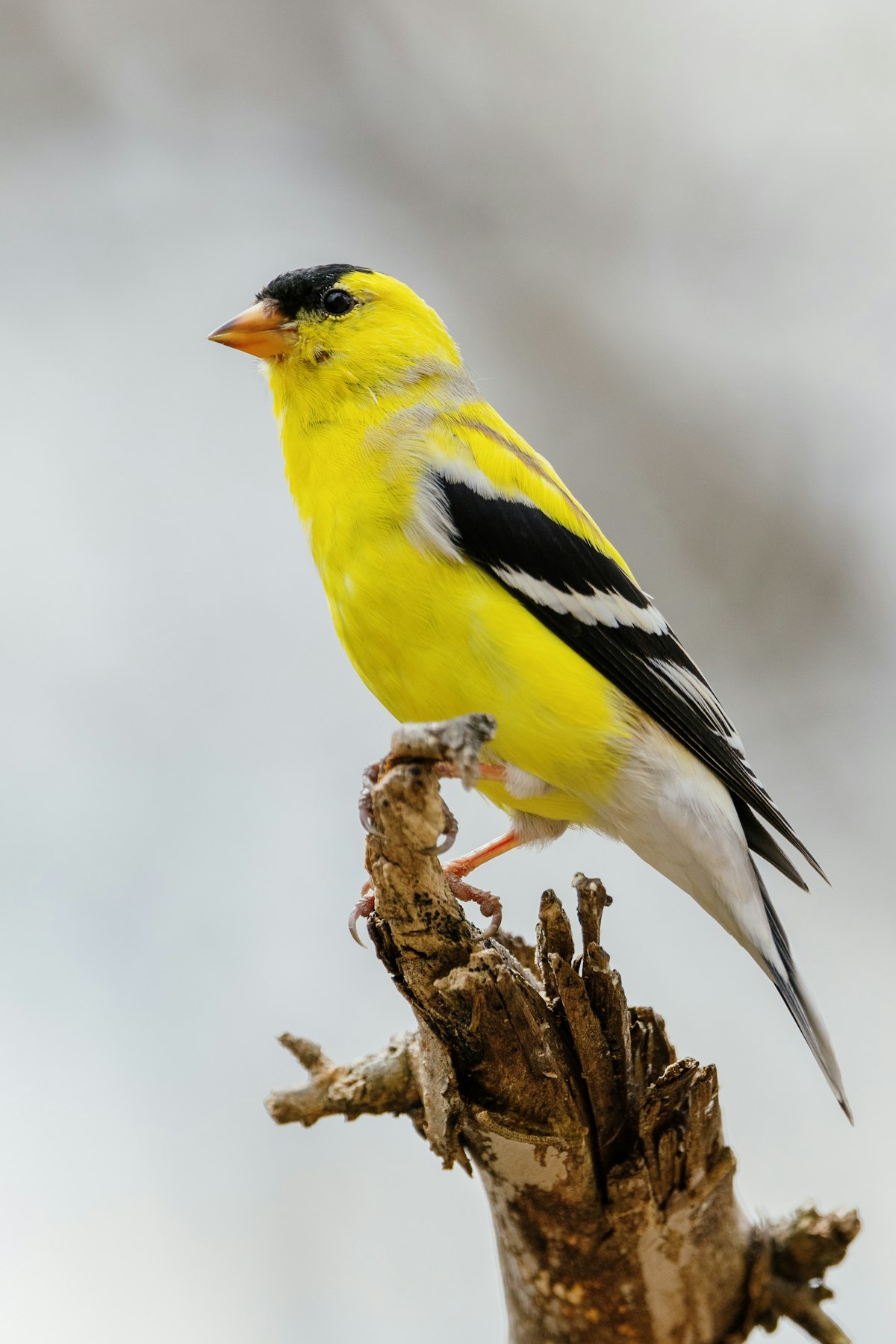
If squirrels empty every feeder you hang, the Squirrel Buster Nyjer Feeder is the one to buy. It uses the same weight-activated system as Brome's famous Squirrel Buster line: openings in an outer shroud line up with the feeding ports, and when a squirrel climbs on, its weight pulls the shroud down and closes access to the seed. Light finches feed freely.
It's made for Nyjer/thistle only and has 8 feeding ports with 4 perches for clinging, so goldfinches can feed from the ports or hang on the side. The feeder has more than 1,100 ratings with a 4.3-star average, and the most common praise is simple: squirrels give up.
The trade-off is fewer birds at once compared with a big mesh tube, and a higher price than basic feeders. For many people, saving the seed that squirrels would have eaten makes up the difference quickly.
Key specs
- Weight-activated shroud closes ports when squirrels climb on
- Designed for Nyjer/thistle seed only
- 8 feeding ports with 4 perches
- Hanging design
Who it's for: Yards where squirrels raid every feeder and anyone tired of throwing away expensive Nyjer seed.
Skip it if: You want to serve finch mix or sunflower chips, or you want the biggest possible crowd of finches at once.
- Truly stops squirrels from eating seed
- Ports reduce Nyjer waste
- Well-known brand with years of reviews
- No baffles needed
- Higher price than simple tubes
- Nyjer only
- Fewer feeding spots than a big mesh feeder
3. Perky-Pet Straight-Sided Wire Mesh Finch Feeder — Best for Budget & Big Flocks
The Perky-Pet Straight-Sided Thistle Feeder is the classic, affordable mesh finch feeder, and with more than 3,500 ratings it's the most reviewed pick here. It's a simple choice if you want to try attracting finches without spending much.
The diamond-shaped wire mesh and a circular perch at the bottom create an all-over dining area, so several finches can cling or perch at once. Perky-Pet's Evenseed design is meant to let the seed fall evenly to the bottom, so birds don't leave a dead zone of old seed. It holds about 1.5 lbs.
Because it's inexpensive, many people hang two in different spots, which spreads out the flock and reduces squabbling during peak season.
Key specs
- Diamond-shaped wire mesh for clinging
- Circular bottom perch
- Evenseed design for even seed flow
- About 1.5 lb capacity
Who it's for: Beginners, budget buyers and anyone who wants to hang more than one finch feeder.
Skip it if: You have squirrels that chew or you want a heavy, all-metal build that lasts many seasons.
- Low price
- Lots of feeding space
- Proven design with thousands of reviews
- Easy to hang a second one
- Smaller capacity than the Kingsyard
- Less durable in squirrel-heavy yards
- Mesh needs regular cleaning in wet weather
4. iBorn 15-Inch Metal Finch Tube Feeder — Best for Less Seed Waste
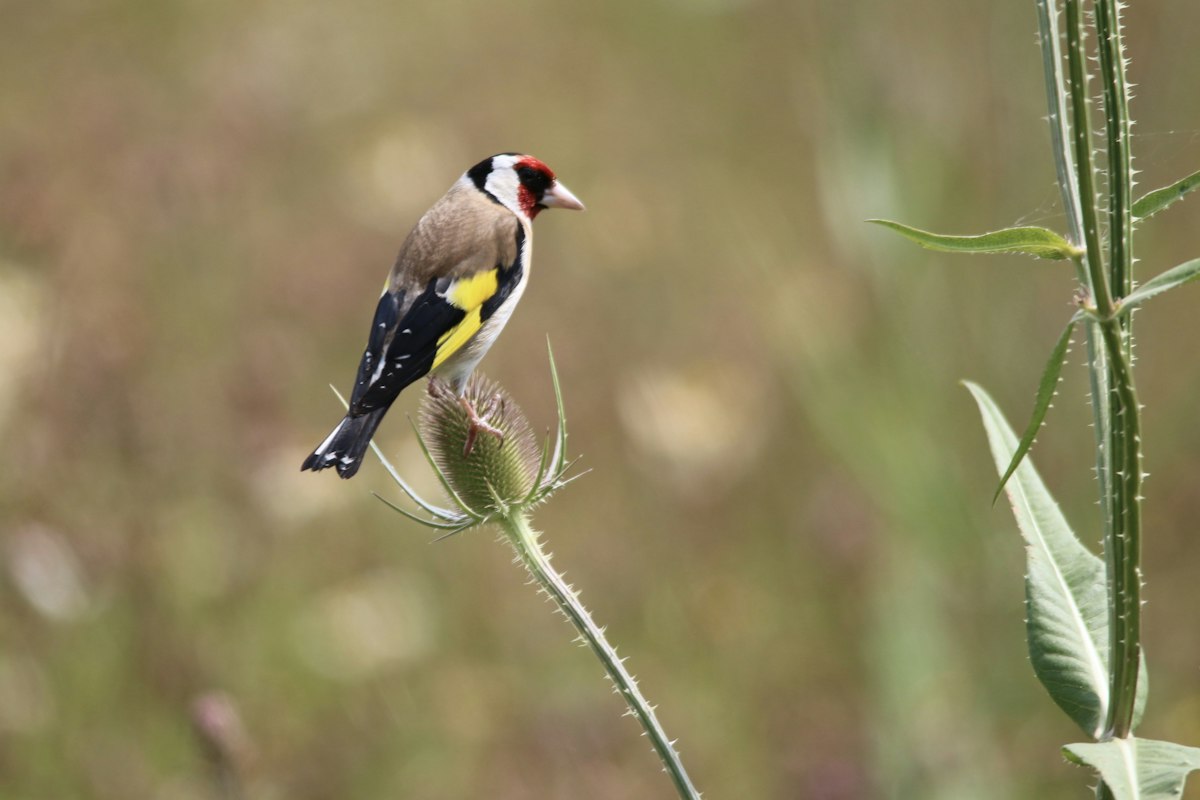
Nyjer seed is pricey, and mesh feeders let birds flick a fair amount onto the ground. The iBorn 15-Inch Finch Feeder uses small ports instead, which keeps seed inside until a bird pulls it out. It has 12 small ports and 8 metal perches on a 15-inch metal tube.
Two details help with a common finch-feeder problem: wet, moldy seed. A V-shaped spacer inside prevents food from building up at the bottom, and four drainage holes at the base let rainwater drain out instead of pooling. Fresh, dry seed matters because finches will abandon a feeder full of spoiled Nyjer.
With 658+ ratings and a 4.3-star average, it's a solid mid-priced choice if you want an orderly, tidy feeder and less mess on your patio.
Key specs
- 15-inch metal tube
- 12 small Nyjer ports and 8 metal perches
- V-shaped inner spacer to stop seed buildup
- 4 drainage holes at the base
Who it's for: Patios, decks and anyone who wants to stretch their seed budget.
Skip it if: You want the most birds feeding at once; mesh designs allow more clingers.
- Ports cut down on scattered seed
- Drainage helps keep seed fresh
- Metal build
- Many perches
- Fewer birds at once than mesh
- Ports need a small brush to clean
- Not squirrel-proof
5. Audubon Die-Cast Aluminum Finch Tube Feeder — Best for Easy Cleaning
Cleaning is the chore that decides whether a feeder stays healthy. The Audubon Die-Cast Aluminum Finch Feeder has an EZ-Clean push-button quick-release base: press it and the bottom comes off, so you can rinse and scrub the tube without fighting screws.
It's a 16-inch tube with a durable yellow die-cast aluminum top and bottom and metal perches, and it holds about 1 lb of Nyjer or finch mix. It's a National Audubon Society licensed product. The bright yellow trim is a nice touch, since many birders feel it helps catch goldfinches' attention, though finches find any feeder with fresh seed eventually.
It has fewer reviews (70+, 4.4-star average) than our other picks, so it's best for people who prioritize hygiene and durable metal hardware over capacity.
Key specs
- Push-button quick-release base for cleaning
- 16-inch tube; die-cast aluminum top and bottom
- Metal perches
- Holds about 1 lb of Nyjer or finch mix
Who it's for: People who clean feeders often (as you should) and want metal parts that won't crack.
Skip it if: You need large capacity or squirrel resistance.
- Fastest to take apart and clean
- Durable aluminum ends and perches
- Works with Nyjer or finch mix
- Compact
- Small 1 lb capacity
- Fewer reviews
- Squirrels can still reach it
6. Kingsyard Finch Feeder with Seed Tray — Best for Less Mess Under the Feeder
If you don't want a pile of Nyjer husks and sprouting seed on your lawn or deck, the Kingsyard Finch Feeder with Seed Tray is built to catch it. A 9.5-inch base tray collects scattered Nyjer to reduce waste and doubles as an extra perching platform for finches that prefer to sit rather than cling.
A 9.5-inch roof shields the seed from rain, helping keep it dry. Kingsyard says the design suits clinging species like goldfinches and house finches. It has a 4.3-star average from 370+ ratings.
This is a good choice for balconies, patios and flower beds, anywhere spilled seed would be a nuisance.
Key specs
- 9.5-inch seed-catching base tray that doubles as a perch
- 9.5-inch roof to keep seed dry
- Designed for Nyjer/thistle
- Hanging design
Who it's for: Decks, balconies and tidy gardens where spilled seed is a problem.
Skip it if: Squirrels are a big issue; the tray gives them a landing spot.
- Catches spilled seed
- Roof helps keep seed dry
- Extra perching space
- Tidy look
- Tray can collect wet husks and needs emptying
- Gives squirrels and larger birds a platform
- Moderate capacity
Buying Guide: How to Choose a Bird Feeder for Finches
Mesh vs. port feeders for finches
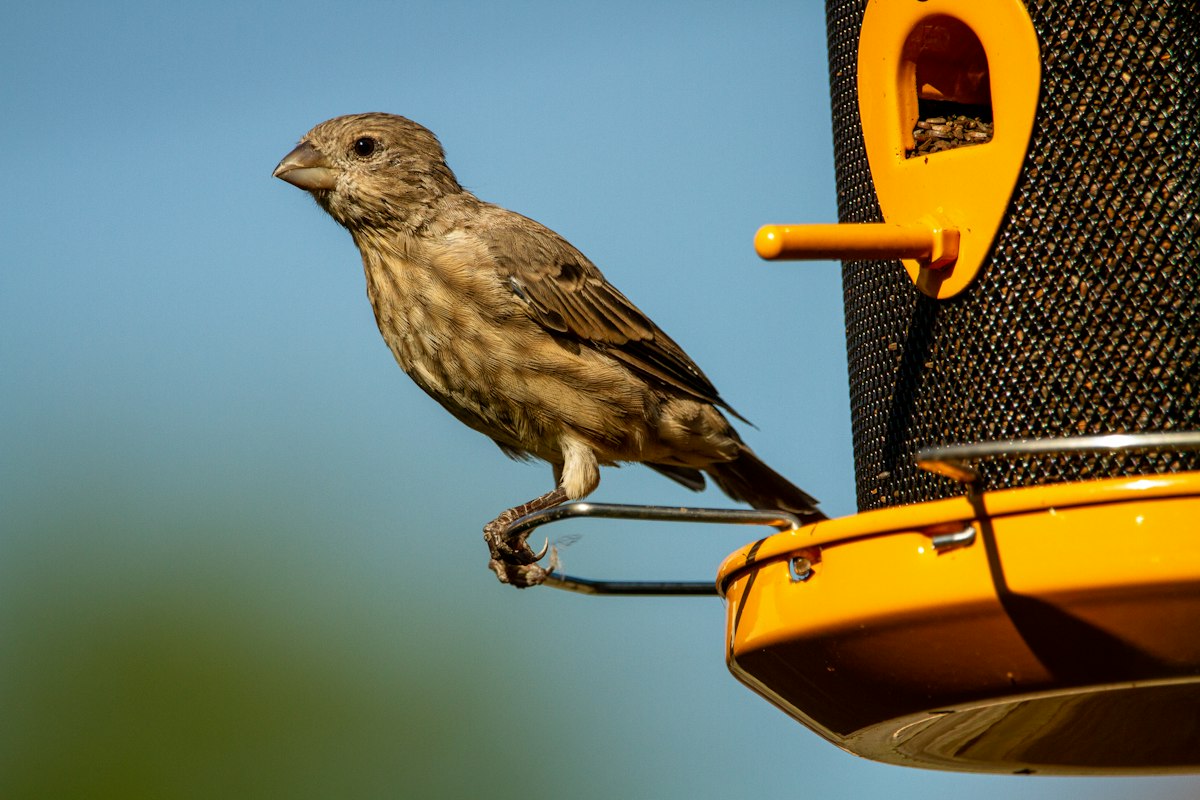
Mesh feeders let finches cling anywhere and pull seed through the wire, which is the most natural way for them to feed and lets the most birds eat at once. The downside is a bit more scattered seed and mesh that can hold moisture. Port (tube) feeders with tiny Nyjer slots waste less seed and stay drier, but fewer birds can feed at the same time. Many experienced birders hang one of each.
Nyjer, thistle or finch mix?
"Thistle" is the common name for Nyjer seed, though it isn't actually from a thistle plant. It's imported seed that's heat-treated so it doesn't sprout. Goldfinches, house finches, pine siskins and redpolls all love it. Finch mixes usually combine Nyjer with fine sunflower chips, which attracts a few more species but can clog Nyjer-only ports. Check that your feeder is rated for the seed you plan to buy.
Keep the seed fresh
Nyjer is oily and spoils faster than sunflower seed. Fill feeders only partway at first so seed turns over within a week or two, and choose feeders with drainage or a roof. If seed clumps, smells musty or looks dark, dump it. Finches will often ignore a feeder that has been sitting full of stale seed, which is the number one reason people say finches "stopped coming."
Placement tips that attract more finches
- Hang the feeder 5–10 feet from shrubs or trees so finches have quick cover but cats can't ambush them.
- Keep it either closer than 3 feet or farther than 30 feet from windows to reduce collisions.
- Be patient. New feeders can take a few days to a few weeks to be discovered.
- Add a water source; a heated bird bath in winter brings in finches when natural water is frozen.
When to feed finches
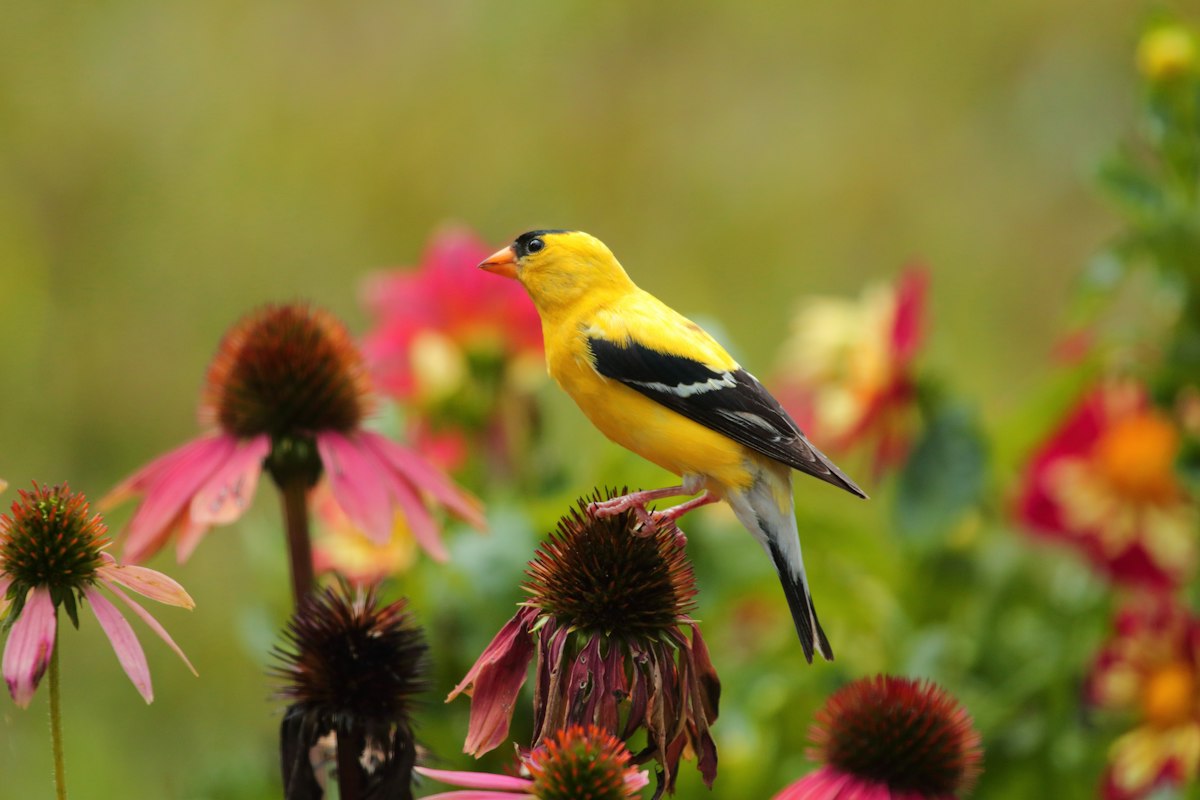
You can feed finches year-round. American goldfinches stay in much of the U.S. all winter, trading their bright yellow summer feathers for a duller olive color, so people sometimes think they've left. In late summer, goldfinches nest later than most birds and feed heavily. Fall and winter often bring flocks of pine siskins and, farther north, redpolls to Nyjer feeders too.
Cleaning and bird health
Clean finch feeders every two weeks, more often in wet weather or if you notice sick birds (finches can spread eye disease at dirty feeders). Empty the seed, scrub with a brush in a solution of one part bleach to nine parts water or hot soapy water, rinse well and let it dry completely before refilling. Quick-release bases like the Audubon's make this much faster.
Build a feeder lineup
A finch feeder works best as part of a small feeding station. Add a feeder for cardinals with sunflower seed, a suet feeder for woodpeckers in winter, and, if you have indoor cats, a window bird feeder for cats to watch so everyone gets a show.
Common problems mentioned in reviews
- Wet, clumped seed: the most frequent complaint. Choose drainage holes or a roof and don't overfill.
- Squirrels chewing: plastic tubes get chewed; metal mesh or the Squirrel Buster solves it.
- Finches not showing up: usually stale seed or a new feeder that hasn't been found yet.
- Hard to clean mesh: keep a bottle brush just for feeders.
Frequently Asked Questions
What kind of bird feeder is best for finches?
A tube or mesh feeder made for Nyjer (thistle) seed is best for finches. Mesh feeders let many finches cling at once, while tube feeders with small Nyjer ports waste less seed. Both work well for goldfinches, house finches and pine siskins.
What color feeder attracts finches?
Many birders believe bright yellow attracts goldfinches, which is why many finch feeders have yellow parts. Fresh seed and good placement matter more than color, though. Finches will find any feeder with clean, dry Nyjer.
Why are finches not coming to my thistle feeder?
The most common reasons are stale or moldy seed, a new feeder that birds haven't discovered yet, or a spot with no nearby cover. Replace old seed, hang the feeder 5 to 10 feet from shrubs, and give it a few weeks.
Do finches prefer mesh or tube feeders?
Finches are natural clingers and readily use mesh feeders, which let more birds feed together. They also use tube feeders with small ports and perches. Many people hang both to serve bigger flocks.
How high should a finch feeder be hung?
Around 5 to 6 feet off the ground is a good height. It's easy for you to refill and high enough to keep finches safer from cats. Keep it within about 10 feet of cover and away from spots where squirrels can jump onto it.
How often should you clean a finch feeder?
About every two weeks, and more often in wet weather or if you see sick birds. Empty the seed, scrub with hot soapy water or a dilute bleach solution, rinse and dry completely before refilling.
The Bottom Line
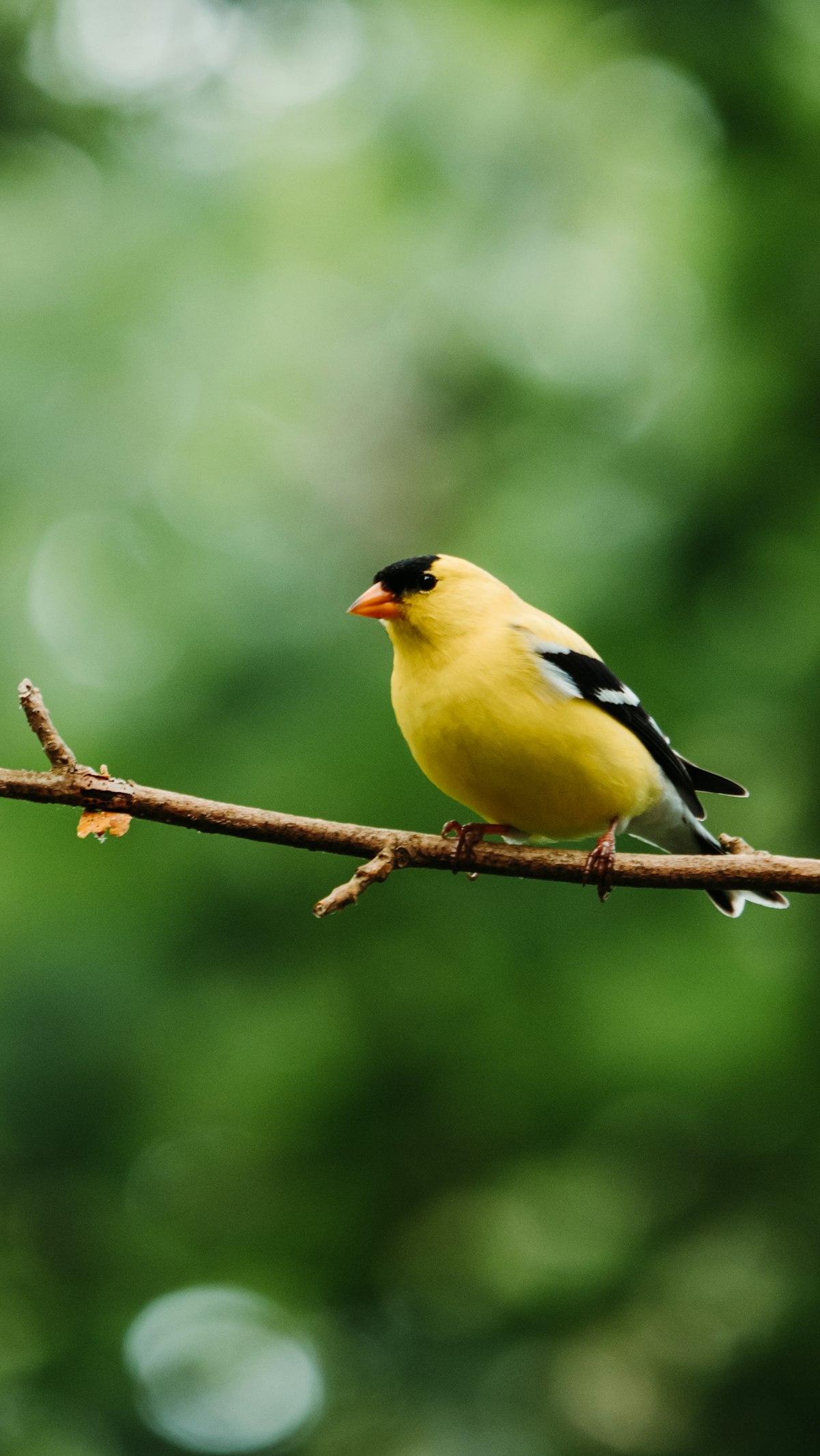
For most backyards, the Kingsyard Metal Mesh Finch Feeder is the best bird feeder for finches: all metal, big capacity and room for a whole flock. If squirrels steal everything, the Squirrel Buster Nyjer Feeder is worth the extra cost. On a budget, start with the Perky-Pet Wire Mesh Feeder, and if you want less waste and a tidier patio, choose the iBorn 15-Inch Tube. Keep the seed fresh, clean the feeder every couple of weeks, and you'll have goldfinches visiting all year.
Comments
Post a Comment